What is electronic invoicing?
Electronic invoicing means issuing an invoice in digital form, in a way that allows it to be sent, stored and transmitted electronically.
It does not simply mean sending a PDF by email. In many cases, electronic invoicing is connected with specific technical and tax requirements, such as:
- correct issuer details
- correct customer details
- clear description of products or services
- correct VAT or exemption handling
- transmission of data to AADE / myDATA
- use of approved methods or providers where required
Simply put, electronic invoicing is not only “making an invoice on a computer”. It is part of the wider digital tax process.
Electronic invoicing and myDATA: what is the difference?
Many people confuse electronic invoicing with myDATA. They are related, but they are not exactly the same thing.
myDATA
myDATA is AADE's electronic bookkeeping system. Invoice and tax transaction data is transmitted there.
Electronic invoicing
Electronic invoicing concerns the way an invoice is issued and sent electronically.
myDATA = how tax data is recorded/transmitted
In practice the two systems connect, because issued documents must update digital tax data correctly.
Is electronic invoicing mandatory?
Electronic invoicing already applies in several cases and its use is gradually expanding. Cases that need special attention include:
- transactions with the public sector
- B2G invoicing
- transactions between businesses
- transmission of documents to AADE
- use of electronic invoicing providers where required
Obligations may differ depending on the type of business, turnover, activity, transaction type and current AADE deadlines.
Before a business changes how it issues invoices, it should confirm its obligations with its accountant.
What should an electronic invoice include?
A proper invoice needs clear and complete information. It usually includes:
- issuer details and issuer tax/VAT number
- customer details and customer tax/VAT number, if the customer is a business
- issue date and document number
- description of products or services
- net value, VAT and total value
- payment method where needed
- any tax withholding or VAT exemption
The important point is not only that an invoice exists. It must be completed correctly.
Practical example
A professional provides technical work for a company. Before issuing an invoice, they need to know who the customer is, the customer's tax number, exactly what work was done, whether materials were used, whether VAT applies and whether tax withholding applies.
If the information is rough or missing, issuing the invoice becomes harder and the chance of mistakes increases.
Common mistakes in electronic invoicing
Wrong customer details
One of the most common problems is a wrong tax number, wrong legal name or incomplete customer information.
Unclear work description
Descriptions such as “work” or “services” may not be clear enough. A specific description is better.
Wrong VAT
VAT depends on the transaction, service, customer and special cases. It should not be applied mechanically without checking.
Mixing services and materials
Technical jobs often include both service work and materials. It should be clear how each item appears on the document.
What is an electronic invoicing provider?
An electronic invoicing provider is an approved service that can issue, send and transmit electronic invoices according to specific standards.
In some cases, using a provider may be necessary or practically useful. This depends on current legislation and the type of transactions a business handles.
Electronic invoicing for B2B, B2G and B2C
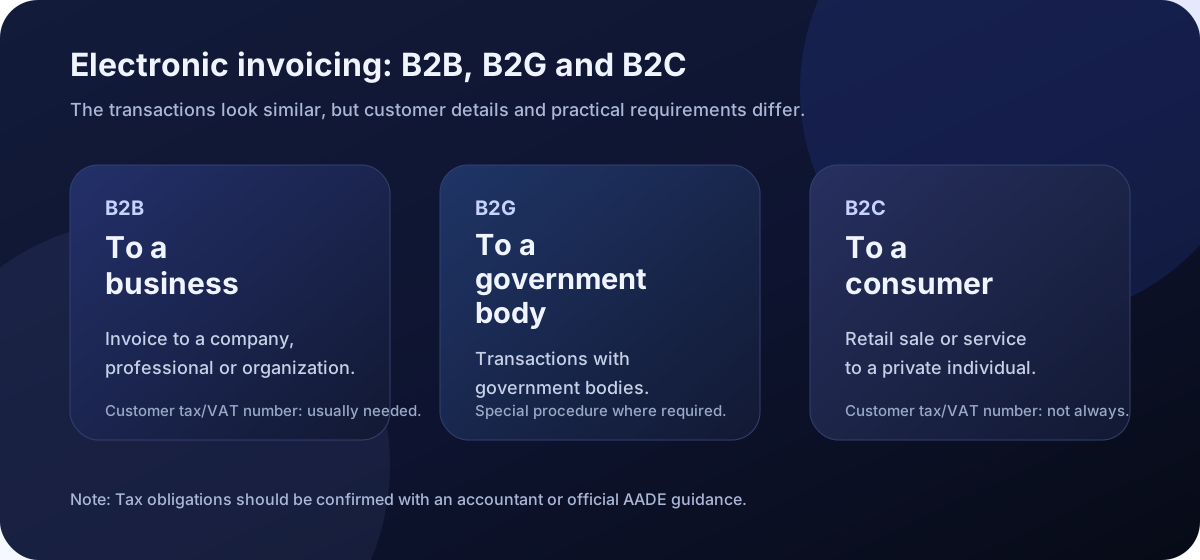
In practice, electronic invoicing is discussed across different transaction types. The most common are B2B, B2G and B2C. The basic principles are similar, but obligations, customer details and transmission methods can differ.
| Transaction type | What it means | What to watch |
|---|---|---|
| B2B | Business-to-business transaction. For example, a professional issues an invoice to a company. | Correct business details, tax/VAT number, service or product description, VAT and transmission in the required way. |
| B2G | Transaction with a government body. Electronic invoicing in public contracts has specific rules and requirements. | Check whether a specific format, provider or procedure is required by the government body. |
| B2C | Transaction with a consumer or private individual. Usually retail sale or service provision to a natural person. | In typical retail transactions the consumer usually does not need to provide a tax/VAT number. Still, check the document type, VAT and AADE / myDATA transmission. |
Practical note for B2C
In a simple business-to-consumer transaction in Greece, a private customer usually does not need to provide a tax number. Typical retail sales or receipts to consumers can be issued without full customer tax details, depending on the document type and the process followed by the business.
If an invoice is requested, or if there is a special case, the required details may change. For B2B transactions and formal invoicing to a business, the customer's tax number is a basic and usually necessary detail.
In simple terms, a document to a business, a document to a government body and a document to a private individual do not always work the same way in practice. Before choosing an issuing method or provider, confirm with your accountant which obligations apply in each case.
How a small business can prepare
- Speak with its accountant.
- Organize customer details.
- Record work clearly.
- Check the current document issuing process.
- Avoid last-minute changes.
Checklist before issuing an electronic invoice
- Are the customer details correct?
- Where required, is the tax/VAT number correct?
- Is the service or product description clear?
- Has VAT been calculated correctly?
- Is there tax withholding?
- Is a special tax note needed?
- Is the date correct?
- Are the net and final values correct?
- Do you know how the transmission will be handled?
- Has the process been agreed with the accountant?
Conclusion
Electronic invoicing in Greece is not just a technical change. It is part of the wider move toward digital tax procedures.
For a professional, the important things are correct details, clear descriptions, organized documents and clear cooperation with the accountant.
Rules may change and obligations are not the same for every business. Every professional should use reliable sources and confirm the practical application of the rules with their accountant.